When Amplifiers and Speakers Stop Listening to Each Other: The Truth About Impedance
There is a particular kind of frustration that belongs exclusively to the serious audio enthusiast: the system that measures well, looks impressive on paper, and yet never quite sounds the way it should. The bass feels slightly loose. The midrange lacks authority. The overall presentation, despite every component carrying a respectable reputation, seems to fall just short of its potential. In many of these cases, the culprit is not the room, not the source material, and not even the equipment itself. It is the relationship between the equipment — specifically, the electrical conversation happening between your amplifier and your speakers.
That conversation is governed by impedance. And it is, with remarkable consistency, one of the most misunderstood concepts in consumer audio.
What Impedance Actually Means — And What It Does Not
Impedance, measured in ohms, describes the total opposition a speaker presents to the flow of electrical current from an amplifier. It is often described as the speaker's "load," and that metaphor is more instructive than it might initially appear. A heavy load demands more effort from the source driving it. A lighter load demands less. When the demands are misaligned with the amplifier's design, the consequences are audible.
The critical misunderstanding begins with the nominal impedance rating printed on a speaker's specification sheet. A speaker listed as "8 ohms" does not maintain a steady 8-ohm load across the entire audible frequency range. In practice, impedance fluctuates dramatically with frequency. A speaker nominally rated at 8 ohms might dip to 3 ohms at certain bass frequencies, climb to 20 ohms or more in others, and behave entirely differently again in the upper midrange. The single number on the box is a useful shorthand — nothing more.
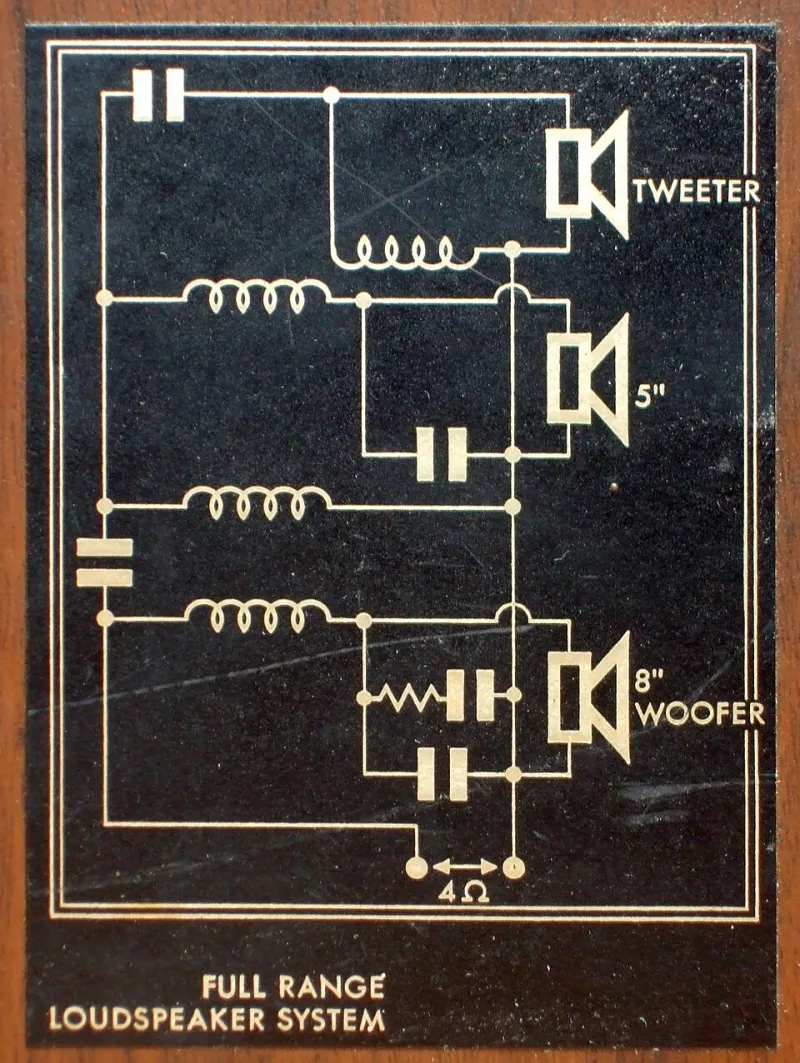
This is not a flaw in how manufacturers communicate specifications. It is a physical reality of how loudspeakers work. The crossover networks, driver voice coils, and cabinet resonances all contribute to a complex, frequency-dependent impedance curve. What matters is not the nominal figure but the full behavior of that curve and how your amplifier responds to it.
The Amplifier's Side of the Conversation
Amplifiers are not passive participants in this relationship. Every amplifier has a preferred load range — a range of impedance values within which it operates most efficiently, most linearly, and with the lowest distortion. Solid-state amplifiers and tube amplifiers handle impedance mismatches in fundamentally different ways, and understanding this distinction is essential for building a coherent system.
Solid-state amplifiers generally tolerate low-impedance loads more gracefully. Many are designed to double their output power as impedance halves — a characteristic sometimes called "load doubling." A solid-state amplifier rated at 100 watts into 8 ohms might deliver 180 to 200 watts into 4 ohms. This can be advantageous with speakers that present demanding low-impedance loads. However, the amplifier's output impedance — typically very low in solid-state designs — means it exercises tight control over the speaker's drivers. That control is, in most circumstances, exactly what you want.
Tube amplifiers operate under a different set of constraints. They typically have higher output impedance and require output transformers to match the amplifier's internal characteristics to the speaker load. These transformers are designed around specific impedance taps — commonly 4, 8, and 16 ohms. When a tube amplifier's output tap is mismatched to the speaker's actual load, the result is a change in the amplifier's damping factor, a shift in its frequency response, and often a softening of bass definition. Some listeners find certain mismatches pleasant. That does not make them accurate.
Damping Factor: The Underappreciated Metric
Damping factor — the ratio of a speaker's nominal impedance to the amplifier's output impedance — is a specification that receives far less attention than it deserves. A high damping factor indicates that the amplifier can exert strong control over the speaker's woofer cone, stopping it quickly after a transient and preventing the kind of overhang that manifests as bloated, imprecise bass.
A low damping factor, conversely, allows the speaker's drivers more mechanical freedom. In tube amplifiers and certain vintage solid-state designs, this can contribute to a characteristic warmth or bloom that some listeners prefer. But it is worth being clear-eyed about what that preference represents: a coloration, not a transparency to the source signal.
For listeners who prioritize accuracy and dynamic precision — particularly those working with larger floorstanding speakers or subwoofers — damping factor deserves serious consideration when evaluating amplifier compatibility.
Real-World Consequences You Can Actually Hear
So what does an impedance mismatch actually sound like? The answer depends on the nature and severity of the mismatch, but several patterns emerge consistently.
When an amplifier is presented with a load that drops significantly below its comfortable operating range, the most common symptom is increased distortion at higher volumes. The amplifier strains to deliver current, the bass becomes thick and indistinct, and in severe cases, thermal protection circuits may engage — or, in the absence of such protection, components may be damaged over time.
When a tube amplifier's output tap is mismatched to the speaker load, the frequency response at the listening position often shifts in subtle but meaningful ways. Bass weight may increase or decrease, and the character of the upper midrange can change in ways that are difficult to identify by ear but immediately apparent on measurement.
Perhaps most insidiously, a mild impedance mismatch may produce no dramatic symptoms at all — just a persistent sense that the system is not quite reaching its potential. This is the scenario that leads experienced listeners to blame their cables, their room, or their source before eventually discovering that the amplifier and speakers were never properly suited to each other.
Practical Steps Toward a Compatible System
Addressing impedance compatibility does not require an electrical engineering degree. It requires attention to a few key pieces of information and a willingness to look beyond the headline specifications.
First, obtain the full impedance curve for any speaker you are considering, not just the nominal rating. Reputable manufacturers publish this data, and independent measurement sources such as Stereophile's loudspeaker measurements archive provide detailed curves for a wide range of speakers. Pay particular attention to minimum impedance and the frequencies at which it occurs.
Second, verify that your amplifier is comfortable driving the speaker's minimum impedance load. Most quality solid-state amplifiers will handle 4-ohm loads without difficulty. Some are rated to 2 ohms. Tube amplifiers require careful matching to the correct output tap, and speakers with very low or highly reactive impedance curves are generally best avoided with tube designs unless you have confirmed compatibility.
Third, if you are building a system from the ground up, consider the amplifier and speakers as a matched pair rather than independent selections. Auditioning them together — in your own space, with your own source material — remains the most reliable test of compatibility that exists.
Impedance is not a glamorous topic. It does not inspire the same enthusiasm as a new cartridge or a beautifully constructed headphone. But it is one of the foundational variables that determines whether an audio system performs as its components are capable of performing. Getting it right is not optional. It is the baseline from which everything else follows.