The Forgotten Frequency: How the Midrange Became Audio's Most Undervalued Real Estate

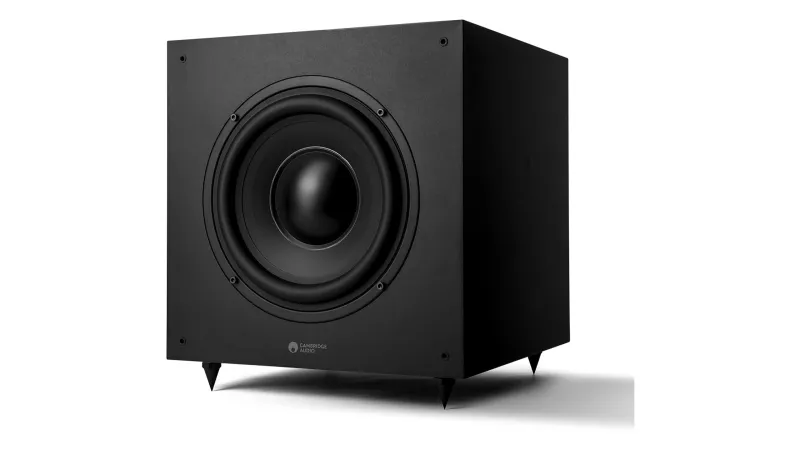
Photo: audiophile bookshelf speakers midrange driver close up studio, via i.ytimg.com
Walk into any consumer electronics retailer and observe the language used to sell speakers. You will encounter claims about bass extension measured in heroic low frequencies, treble response reaching well beyond the limits of human hearing, and driver counts that suggest complexity is synonymous with quality. What you will rarely encounter is a compelling argument for midrange performance. The middle of the frequency spectrum — roughly 300 Hz to 5,000 Hz — receives the least marketing attention of any frequency range. It is, in the parlance of the audio industry, unsexy.
This neglect is not merely a marketing failure. It reflects a genuine design philosophy that has shaped consumer speaker development for decades, often to the detriment of the listening experience. And it matters enormously, because the midrange is not peripheral to music. It is the core of it.
Where Music Actually Lives
Consider what occupies the midrange. The human voice — every voice, from a baritone to a soprano — resides primarily within this frequency band. The fundamental tones and most critical harmonics of acoustic guitar, piano, violin, cello, trumpet, and saxophone all fall within or near this range. When you respond emotionally to a recording — when a vocal phrase moves you, when a guitar chord feels physically present, when a string quartet seems to breathe — you are responding to midrange reproduction.
The extremes of the frequency spectrum provide context and dimension. Deep bass creates physical weight and scale. Extended treble contributes air, shimmer, and fine textural detail. But remove the midrange from a recording and the music loses its identity. Remove the bass or the treble and it remains recognizable. This hierarchy of perceptual importance is not subtle, yet the audio industry's investment in driver technology, cabinet engineering, and marketing vocabulary suggests the opposite priority.
The Tyranny of Measurement Culture
Part of the problem is measurement. Bass extension and high-frequency response are easy to quantify and easy to compare between competing products. A speaker measured to 25 Hz can be positioned against one that reaches only 40 Hz, and the comparison appears straightforward on paper. Treble extension above 20 kHz — inaudible to virtually every adult listener — nonetheless reads as a specification worth advertising.
Midrange quality is far more resistant to simple numerical description. What makes one speaker's midrange more convincing than another's involves tonal accuracy, harmonic integrity, dynamic nuance, and a kind of coherence that resists reduction to a single measurement. Reviewers reach for terms like presence, body, and naturalness — language that is subjective by necessity, and therefore less persuasive in an industry that has come to rely on specifications as a proxy for performance.
This creates a market incentive problem. Manufacturers who invest heavily in midrange driver quality and crossover design cannot easily communicate that investment in a spec sheet. Those who invest in subwoofer extension or a tweeter rated to 40 kHz can advertise both numbers prominently. The consumer, understandably, gravitates toward the measurable.
The Cost of the Three-Way Compromise
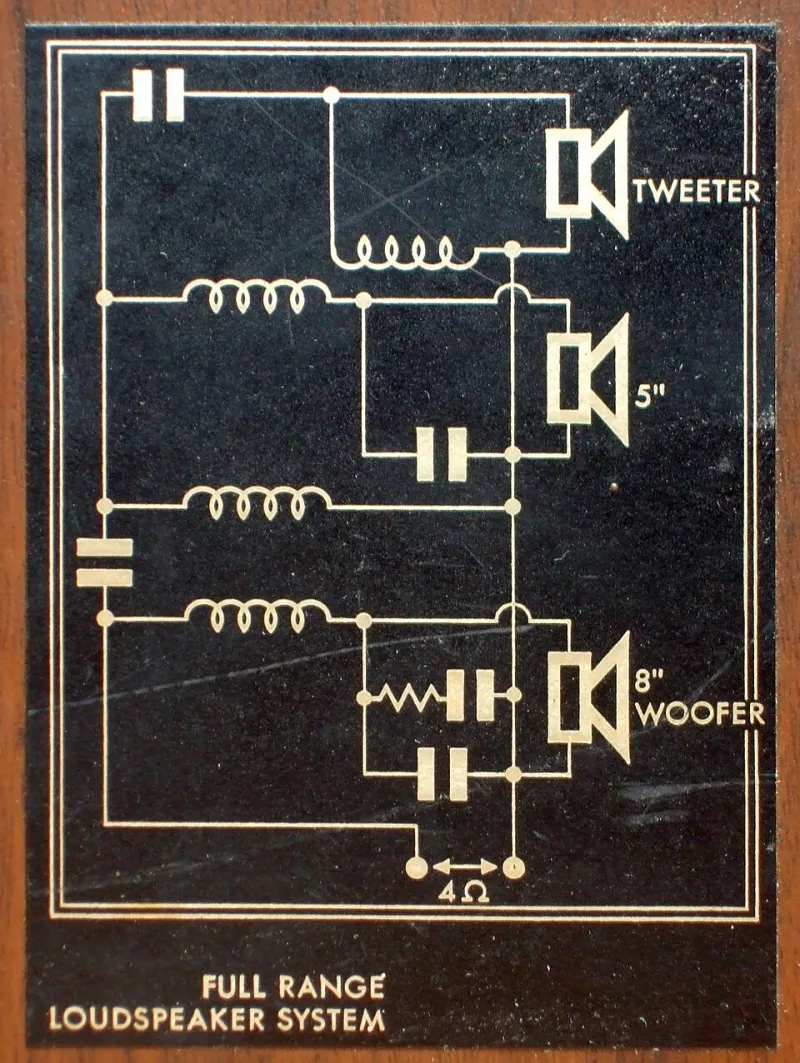
Modern speaker design frequently compounds the midrange problem through the architecture of the three-way loudspeaker. In a three-way design, a dedicated midrange driver handles the critical band between woofer and tweeter. In principle, this is ideal — a driver optimized for a specific frequency range, free from the compromises inherent in asking a single driver to cover too broad a spectrum.
In practice, however, the midrange driver in many commercial three-way speakers is the component that receives the least engineering attention and the smallest portion of the manufacturing budget. The woofer must handle low-frequency excursion demands. The tweeter must be smooth and extended. The midrange driver, sandwiched between them, is often a cost-reduced unit whose integration with the crossover network is addressed only superficially.
The result is a speaker in which the most important frequency range is handled by the weakest link in the chain. Vocals that should sound immediate and three-dimensional instead seem recessed, slightly veiled, or tonally inconsistent across the register. Acoustic instruments lose their fundamental character. The speaker measures acceptably but fails to communicate.
Designs That Get It Right
There is, fortunately, a tradition within high-fidelity audio that takes the midrange seriously — sometimes to the point of treating it as the organizing principle around which all other performance parameters are built.
British speaker manufacturers, for much of the latter twentieth century, pursued a philosophy in which midrange coherence was explicitly prioritized over bass extension. The BBC LS3/5A — a compact two-way monitor developed in the early 1970s and still in production in licensed variants today — remains one of the most instructive examples in audio history. Its bass extension is modest by any modern standard. Its treble is refined but not extravagant. What it does with voices and acoustic instruments, however, continues to astonish listeners encountering it for the first time. The midrange is simply right in a way that no specification adequately predicts.
Single-driver speaker designs, which use one full-range driver to cover the entire audible spectrum, represent a different approach to the same problem. By eliminating the crossover network entirely within the midrange band, these designs achieve a phase coherence and tonal continuity that multi-driver systems struggle to replicate. Their limitations in bass extension and high-frequency dispersion are real. But their midrange — uninterrupted by crossover filters, free from the time-alignment challenges inherent in multi-driver arrays — can be revelatory.
Among contemporary manufacturers, a small number have made midrange integrity a stated design priority. These products tend to appear in high-end catalogs rather than mass-market retail channels, which partly explains why their approach has not reshaped the broader industry. They represent, nonetheless, a compelling argument for what is possible when the most important frequency range receives the most serious engineering attention.
Listening Differently
For the audiophile willing to recalibrate their priorities, the practical implication is straightforward: when auditioning speakers, bring recordings that feature voices and acoustic instruments prominently. Listen not for the deepest bass or the most extended treble, but for the quality of a vocalist's breath, the body of a guitar's resonance, the natural decay of a piano note in the midrange. These are the frequencies that will determine whether a speaker moves you over the course of an evening's listening or merely impresses you during a brief demonstration.
The midrange is where music makes its case for your attention. It deserves to make that case through equipment that takes it seriously.