One Subwoofer, Infinite Problems: The Brutal Truth About Bass Integration in Home Audio
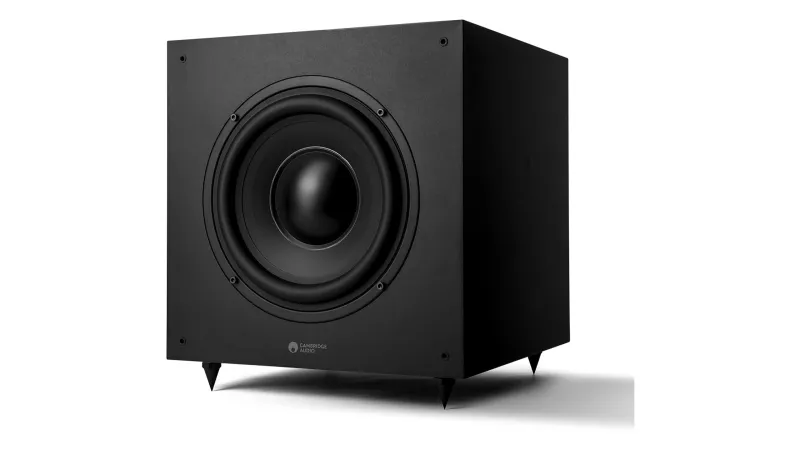
Photo: subwoofer speaker placement home audio listening room, via static1.pocketlintimages.com
There is a particular kind of frustration familiar to anyone who has spent serious money on audio equipment. You research carefully, purchase thoughtfully, and then — in an effort to bring the final piece of the puzzle into place — you add a subwoofer. The result, more often than not, is a system that sounds worse than it did before. The bass is louder, certainly. But it is also slower, disconnected, and oddly omnipresent. Music that once felt grounded now feels bloated. The room seems to pulse on certain notes and go eerily quiet on others.
This is the subwoofer paradox. The component designed to complete your sound has instead fractured it.
Understanding why this happens — and how to correct it — requires setting aside the instinct to treat bass as a simple volume problem. Low-frequency integration is, in fact, one of the most technically demanding disciplines in domestic audio, and the room itself is an active participant in the outcome.
The Room Is Not a Passive Container
Most listeners think of their listening room as a neutral space through which sound travels. It is not. At low frequencies, a room behaves as a resonant structure. Sound waves interact with the physical dimensions of the space, reinforcing certain frequencies while canceling others. These interactions are called room modes, and they are the primary reason that bass response measured at the listening position rarely resembles what a subwoofer is theoretically capable of delivering.
A room mode occurs when a bass frequency's wavelength aligns with a room dimension — wall to wall, floor to ceiling, or front to back. At those specific frequencies, pressure builds dramatically at certain locations while dropping to near silence at others. Move two feet to the left, and a frequency that seemed thunderously loud may virtually disappear. This is not a problem with your equipment. It is physics.
The practical consequence is that subwoofer placement is not arbitrary. Positioning a subwoofer in a corner will typically maximize output — but it will also excite room modes more aggressively than almost any other placement. A corner-loaded subwoofer may measure impressively loud but produce bass that is uneven, one-note, and difficult to tame through calibration alone.
Before adjusting a single dial on your subwoofer, experiment with placement. Moving the unit even twelve inches from its initial position can yield measurably and audibly different results.
Phase: The Silent Saboteur
Of all the variables that undermine subwoofer integration, phase misalignment is perhaps the least understood and the most consequential. Phase refers to the timing relationship between the bass frequencies produced by your subwoofer and those produced by your main speakers. When these two sources are in phase, their output combines constructively, producing full, coherent bass. When they are out of phase — even partially — they cancel each other, hollowing out the very frequencies you added the subwoofer to reinforce.
Many subwoofers offer a simple 0/180-degree phase switch. This is a blunt instrument. A more useful approach is a continuously variable phase control, which allows fine adjustment across the full range of timing relationships. The correct setting is not 0 or 180 by default — it is whatever setting produces the flattest, fullest response at the crossover frequency as measured at the listening position.
For those serious about this process, a measurement tool such as REW (Room EQ Wizard), paired with an inexpensive calibration microphone, transforms guesswork into data. A single measurement sweep will reveal phase relationships, room modes, and frequency response irregularities with far more precision than any amount of critical listening alone.
Crossover Calibration: Where Most Systems Fail
The crossover frequency — the point at which your main speakers hand off bass duties to the subwoofer — is perhaps the most consequential setting in the entire integration process, and the most frequently misconfigured.
The common instinct is to set the crossover as low as possible, under the assumption that a lower handoff point will make the subwoofer less audible as a separate source. This logic is understandable but often counterproductive. If your main speakers are struggling to reproduce frequencies below their natural roll-off point, asking them to do so while also blending with a subwoofer creates an overlap zone where cancellation and reinforcement interact unpredictably.
The correct crossover frequency is determined by the actual capability of your main speakers — not by their published specifications, which frequently overstate low-frequency extension. A bookshelf speaker rated to 50 Hz may produce usable output only to 80 or 90 Hz under real-world conditions. Setting the crossover at 80 Hz and allowing the subwoofer to take over cleanly from that point will typically produce far more seamless integration than attempting a 50 Hz crossover that leaves both sources competing in the same range.
The Dolby and THX standard of 80 Hz for home theater systems exists for good reason. For two-channel music systems, the ideal crossover point depends on the specific speakers involved, but erring toward a higher frequency and dialing the subwoofer's volume down is almost always preferable to a lower crossover with the subwoofer running hot.
The Gain Problem: More Is Almost Always Less
Subwoofer gain controls are frequently set far too high. This is partly a showroom phenomenon — dealers demonstrate subwoofers at levels that impress during brief auditions but fatigue and irritate over the course of a full listening session. It is also a psychological tendency: bass is viscerally satisfying in a way that encourages excess.
A properly integrated subwoofer should be difficult to localize. If you can point to where the bass is coming from, the gain is likely too high, the crossover too low, or the placement poorly chosen. The goal is a system in which low frequencies seem to emanate from the room itself, seamlessly continuous with the output of the main speakers.
A useful calibration technique: set the subwoofer gain to its minimum, then slowly increase it while playing a familiar recording with consistent bass content. Stop the moment the bass begins to sound full and natural. Then reduce the gain slightly. That is your target level.
A Note on Equalization
Room correction software — available in processors from Dirac, Audyssey, and others — can address some room mode irregularities through digital equalization. These tools are genuinely useful, but they are not a substitute for physical optimization. Equalization can reduce a peak; it cannot create output at a null. Solving room problems acoustically first, then applying equalization to refine the result, produces far better outcomes than relying on DSP to compensate for a poorly placed, poorly calibrated subwoofer.
The Reward for Getting It Right
A subwoofer that has been properly placed, phased, crossed over, and calibrated does something remarkable: it disappears. You become aware of it not as a separate source of bass, but as a foundation beneath the music — an extension of the soundstage downward that makes everything above it feel more substantial, more present, and more real.
That experience is worth pursuing. It simply requires accepting that the path to great bass is not a volume knob. It is patience, measurement, and a willingness to let the music — not the equipment — be the loudest thing in the room.