Sealed In, Opened Out: The Uncomfortable Trade-Off at the Heart of Isolation Headphone Design
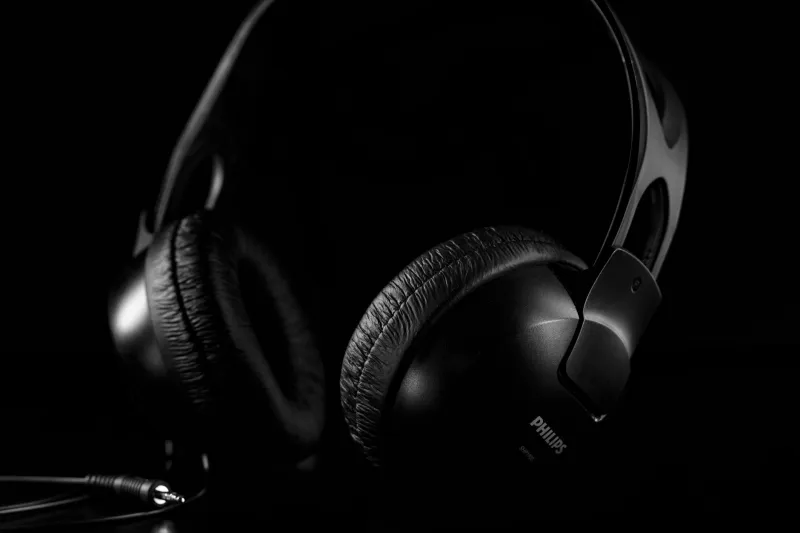
The commuter reaching for a pair of premium closed-back headphones on a crowded subway platform is making a reasonable choice. The noise is real, the desire for musical immersion is legitimate, and the market offers an impressive range of well-engineered options at multiple price points. What that commuter is unlikely to consider — and what the marketing materials for those headphones will almost certainly not mention — is that the acoustic seal creating the isolation is simultaneously constraining the spatial experience the recording was designed to produce.
This is not a minor caveat. It is a fundamental engineering tension that shapes every closed-back headphone design at every price level, and understanding it changes how one should think about portable high-fidelity listening.
How Isolation Works, and What It Costs
Passive noise isolation in headphones operates on a straightforward acoustic principle: create a sealed chamber between the driver and the ear canal, and attenuate external sound through the mass and damping properties of the earcup materials. The better the seal, the greater the isolation. Manufacturers pursuing high isolation invest in dense earcup materials, memory foam padding that conforms precisely to the head, and rigid shells that resist acoustic transmission.
All of this works. A well-designed closed-back headphone can reduce ambient noise by 20 to 30 decibels across a broad frequency range — enough to make a subway car, an open-plan office, or an airplane cabin acoustically manageable without active noise cancellation. The trade-off is that the same sealed chamber that excludes external sound also traps and shapes the sound produced by the driver in ways that are acoustically problematic for spatial reproduction.
The sealed cavity behind the driver and around the ear creates a pressurized acoustic environment that behaves quite differently from the free air in which headphones with open backs operate. Bass frequencies, in particular, accumulate in ways that must be carefully managed through tuning — and that management involves compromises. More significantly, the acoustic boundary created by the sealed earcup interacts with the driver's output to produce resonances and reflections that have no equivalent in open-back designs or, for that matter, in loudspeaker listening.
The Soundstage Problem
Soundstage — the perceived spatial distribution of instruments and voices across and beyond the stereo image — is one of the most valued qualities in high-fidelity reproduction. Listeners who invest in premium equipment do so in part because they expect to hear a convincing recreation of the recorded space: the sense that musicians are arranged at specific distances and positions, that the recording venue has identifiable dimensions, that the sound extends beyond the physical boundaries of the equipment producing it.
Open-back headphones approach this goal more closely than closed designs, and the reason is acoustic. In an open-back headphone, sound from the driver's rear radiates outward through the perforated or open earcup, interacting with the listener's outer ear and the near-field environment in a manner that loosely approximates the reflective behavior of sound in a room. The result is an image that, while still fundamentally inside the head — a characteristic of all headphone listening — tends to be wider, more diffuse, and more convincingly spatial than what closed designs produce.
Closed-back headphones, by contrast, trap the driver's rear radiation inside the earcup. This energy must go somewhere, and it typically reflects back toward the driver and the ear in ways that reinforce certain frequencies and create a more confined, more directly pressurized listening experience. The image narrows. Depth becomes harder to perceive. The sense of air and space around instruments — qualities that audiophiles routinely cite as markers of high-resolution reproduction — is compressed.
The effect is not uniform across all closed designs; engineering skill and driver quality matter considerably. But no closed-back headphone, at any price, fully escapes the spatial constraints imposed by its sealed architecture.
Active Noise Cancellation and Its Own Complications
Active noise cancellation, increasingly standard in premium portable headphones, addresses the isolation problem through electronic rather than purely acoustic means. By generating inverse sound waves to cancel ambient noise, ANC technology allows manufacturers to achieve effective environmental attenuation without relying entirely on acoustic sealing — which, in principle, creates some design freedom in the acoustic chamber.
In practice, however, ANC introduces its own set of spatial distortions. The phase manipulation required to produce cancellation signals affects the perceived spatial character of the music signal as well. Many listeners report that ANC headphones, even when the cancellation circuitry is performing correctly, produce an image that feels processed, slightly artificial, or lacking in natural spatial depth. The artifacts are subtler at high price points and with well-implemented algorithms, but they are rarely absent entirely.
For listeners who prioritize soundstage and spatial fidelity, ANC is a partial solution to the isolation problem — one that trades acoustic spatial distortion for electronic spatial distortion.
Rethinking the Portable Listening Paradigm
If isolation and spatial fidelity are genuinely in tension, the question becomes whether there are approaches to portable high-fidelity listening that navigate the trade-off more honestly.
In-ear monitors with custom or well-fitted universal tips offer one avenue. The insertion depth and seal geometry of a well-fitted IEM differ fundamentally from the large sealed cavity of an over-ear closed-back design. The acoustic chamber is smaller, the resonant behavior is different, and some high-performance IEM designs achieve spatial presentation that rivals or exceeds many closed-back over-ear headphones — while providing comparable or superior isolation through the physical seal of the ear tip itself.
Another approach, appropriate in contexts where some ambient sound is tolerable, is the deliberate acceptance of open or semi-open portable designs. On-ear open headphones, or lightly vented closed designs that sacrifice some isolation for acoustic openness, occupy a middle position that many experienced listeners find preferable to either extreme.
Finally, there is the honest acknowledgment that truly high-fidelity spatial reproduction and meaningful passive isolation are not fully compatible goals within current headphone technology. A listener who requires isolation — on an airplane, in a noisy office, during a commute — should select equipment optimized for that environment and accept its sonic limitations. A listener whose priority is the finest possible spatial reproduction should listen in a controlled environment with open-back equipment suited to that purpose.
The Value of Honest Expectations
The closed-back isolation headphone is a genuinely useful tool. It solves a real problem effectively and, at its best, delivers musical experiences of considerable quality. The disservice occurs when marketing positions these products as uncompromised high-fidelity listening devices — when the compromises, while real and acoustically fundamental, are left unacknowledged.
The listener who understands what isolation headphones are actually trading away makes better decisions: about which headphones to buy, about when to use them, and about how to build a complete personal audio system that serves different listening contexts appropriately. That understanding begins with accepting that the seal keeping the world out is also, in some measure, keeping the music in.