First Listen, Wrong Impression: The Neuroscience of Warming Up to New Audio Equipment
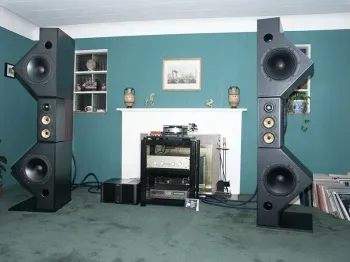
Photo: Hifimjv, CC BY-SA 3.0, via Wikimedia Commons
You spent months researching. You read every review, cross-referenced every measurement, and listened to forum debates that stretched across hundreds of posts. Then the package arrived, you connected the new component, pressed play — and felt a quiet, unsettling deflation. Something was off. The sound was different, certainly, but not obviously better. Perhaps it was thinner than you anticipated. Perhaps the bass felt restrained. Perhaps the whole presentation seemed clinical in a way that left you wondering whether you had made a very expensive mistake.
This experience is so common among serious listeners that it deserves a name. Call it the first-listen paradox: the phenomenon by which genuinely superior audio equipment frequently fails to impress on initial acquaintance, while inferior gear that flatters certain frequencies can sound immediately gratifying. Understanding why this happens is not merely an academic exercise. It is essential knowledge for anyone who wants to evaluate new gear honestly — and avoid costly, premature returns.
The Auditory System Is a Moving Target
Human hearing does not function like a measurement microphone. A calibrated microphone presents the same flat transfer function to every signal it encounters. The auditory cortex, by contrast, is a living system continuously shaped by recent experience, expectation, emotional state, and neurological adaptation.
Neuroscientists refer to this process as auditory adaptation — the brain's tendency to normalize the characteristics of a sustained sonic environment over time. When you listen to the same speakers or headphones for months or years, your brain constructs a detailed internal model of that system's particular colorations, frequency emphases, and spatial presentation. That model becomes your perceptual baseline. Everything you hear is filtered through it unconsciously.
When new equipment arrives, it presents a different sonic signature. Even if that signature is measurably more accurate, it deviates from your internalized reference. Your brain registers the deviation not as improvement but as unfamiliarity — and unfamiliarity, in perceptual terms, often registers as discomfort or dissatisfaction before it registers as clarity.
The Expectation Trap
Compounding the adaptation problem is the considerable weight of expectation. After months of research, most audiophiles arrive at a new purchase with a vivid mental image of what the upgrade will sound like. That image has been constructed from written descriptions, measurements, and secondhand accounts — none of which translate cleanly into genuine auditory prediction.
When the actual sound diverges from the imagined sound, the brain experiences a form of perceptual dissonance. Interestingly, this effect operates independently of quality. A component that is genuinely superior in every measurable dimension can still disappoint if its presentation does not match the listener's preconceived model. The brain, in effect, penalizes novelty before it rewards accuracy.
Research in sensory psychology has demonstrated that human subjects consistently rate familiar stimuli as more pleasant than unfamiliar ones of equivalent or higher objective quality — a phenomenon known as the mere exposure effect, documented extensively by social psychologist Robert Zajonc. Audio perception is not immune to this principle. The warmth you loved in your previous amplifier may have been a coloration, but it was your coloration, and your brain had spent years learning to call it natural.
What Recalibration Actually Feels Like
For most listeners, genuine recalibration occurs somewhere between ten and forty hours of sustained listening to the new component — though this window varies considerably with the magnitude of the sonic change and the individual's neurological flexibility. The process is rarely dramatic. There is no single moment of revelation. Instead, the sound gradually acquires a quality that audiophiles sometimes describe as "settling in," though the settling is happening in the listener rather than the equipment.
Specific characteristics tend to emerge in sequence. Tonal balance is typically the first dimension to normalize; what initially sounded bright or thin begins to feel neutral once the brain adjusts its internal reference point. Spatial presentation follows — the soundstage, which may have seemed artificially wide or unnervingly precise at first, starts to feel like a window rather than an artifact. Micro-dynamic nuance, often the last quality to register, reveals itself only after the listener has stopped consciously analyzing and begun simply receiving the music.
This progression explains why first-week impressions of high-resolution components are notoriously unreliable. The qualities that define genuinely excellent audio equipment — transparency, dynamic honesty, low coloration — are precisely the qualities that require an adapted listener to appreciate fully.
Practical Strategies for Honest Evaluation
Knowing that your brain requires adjustment time does not mean abandoning critical judgment. It means structuring your evaluation period to account for the perceptual variables in play.
Resist the urge to compare immediately. Switching back and forth between old and new components within the first few days amplifies the unfamiliarity effect and prevents the adaptation process from taking hold. If comparison is necessary, allow at least several days of exclusive listening to the new equipment before reintroducing the old reference.
Use familiar, well-recorded material. The evaluation period is not the time to explore new music. Tracks you know intimately provide a stable perceptual anchor against which genuine changes in presentation become more apparent over time.
Listen passively as well as critically. Deliberate analytical listening activates cognitive processes that can obscure perceptual adaptation. Allow yourself extended sessions of background listening — music playing while you read, work, or simply sit quietly. These sessions are often where genuine recalibration occurs most efficiently.
Keep a listening journal. Note specific impressions on day one, day three, day seven, and day fourteen. Written records reveal the trajectory of your adaptation more clearly than memory alone, and they provide valuable evidence when you attempt to distinguish genuine improvement from mere familiarity.
Be honest about what you are adjusting to. Recalibration works in both directions. Sometimes extended listening reveals that what initially seemed clinical is in fact accurate, and that you were simply accustomed to a pleasant coloration. Occasionally, the reverse is true: initial discomfort reflects a genuine flaw that familiarity was beginning to mask. A listening journal helps you distinguish between these outcomes.
The Honest Verdict Takes Time
The audio industry has a complicated relationship with patience. Retailers set return windows. Forum culture rewards rapid, confident pronouncements. The upgrade cycle itself is predicated on the idea that better sound is immediately recognizable. None of this serves the listener who wants to know, with genuine confidence, whether a new component is worth keeping.
At Hawthorne Audio, we believe that the most meaningful evaluation of any piece of equipment happens not in the first hour but in the third week — after the novelty has faded, after the adaptation has settled, and after the brain has had sufficient exposure to render something closer to an honest judgment. Equipment that continues to reward attention after that adjustment period has passed is equipment worth trusting. Equipment that merely sounded different, and that familiarity has dressed up as improvement, will reveal itself clearly enough if you are patient enough to wait.
The phantom upgrade is real. But so is the genuine one — and the difference between them becomes visible only when you give your brain the time it needs to catch up with your ears.