You Don't Own the Sound Anymore: How Streaming Is Quietly Redefining What 'Good Audio' Means
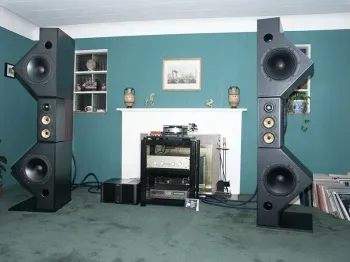
There is a particular quality to the sound of a well-mastered CD played through a resolving audio system — a sense of space, of dynamic contrast, of sonic events occurring within a three-dimensional field rather than simply emanating from a pair of drivers. It is the quality that first drew many listeners into high-fidelity audio, and it is the quality that streaming, for all its convenience and catalog depth, has made genuinely difficult to take for granted.
The conversation about streaming audio quality tends to focus narrowly on bitrate and codec. Lossless versus lossy. AAC versus MP3. Spatial audio versus conventional stereo. These are real distinctions, and they matter. But they are not the whole story — and in some respects, they are not even the most important part of it. The deeper transformation wrought by the streaming era is not technical. It is perceptual. It concerns what listeners have been conditioned to expect from recorded music, and what they are no longer equipped to notice when it is absent.
The Compression Conversation We're Still Getting Wrong
Lossy audio compression remains the default delivery format for the majority of streaming consumption worldwide. Spotify's standard quality setting, used by a substantial portion of its 600-plus million monthly active users, delivers audio at 128 kbps AAC on mobile and up to 320 kbps on premium tiers. Apple Music and Tidal offer lossless options, and Amazon Music Unlimited provides HD and Ultra HD tiers, but listener uptake of these higher-quality formats remains modest relative to the overall user base.
The audibility of lossy compression is a subject of genuine scientific debate, and the honest answer is that it depends. At 320 kbps, a well-implemented AAC or Ogg Vorbis encoder will be transparent to most listeners on most material through most systems. At 128 kbps, the situation is considerably more complicated. Pre-echo artifacts, smearing of transient information, and the characteristic thinning of low-level detail in complex passages are all audible through a resolving headphone or speaker system to a trained listener.
The practical problem is not that 128 kbps sounds dramatically bad. It is that it sounds subtly, persistently diminished — and that this diminishment, experienced consistently over years, recalibrates the listener's reference point. What sounds normal is what sounds familiar. When familiar means compressed, compressed begins to sound normal.
Mastering for the Algorithm
The perceptual recalibration extends beyond compression to the mastering practices that streaming has incentivized. The loudness wars of the CD era — during which masters were compressed and limited to extreme levels in competition for perceived loudness on radio — have not simply ended. They have mutated.
Streaming platforms normalize playback loudness using integrated loudness standards, primarily the LUFS (Loudness Units Full Scale) metric. Spotify targets -14 LUFS integrated; Apple Music and Tidal target -16 LUFS. The intent is to prevent the jarring level jumps between tracks that characterized the loudness war era. The unintended consequence is a new set of mastering incentives.
Some mastering engineers — particularly those working in pop, hip-hop, and electronic music — have adapted by producing masters that sound competitive at normalized levels while retaining minimal dynamic range. The result is not as extreme as the worst CD-era masters, but it is characterized by a flatness of dynamic expression, a uniformity of perceived density, that is antithetical to the acoustic experience of live music.
"The best masters I work on are still made for the music," says one veteran mastering engineer who has worked on major-label releases for more than two decades. "But I am regularly asked to deliver files that will perform well in shuffle contexts — that will hold attention in the first fifteen seconds. That is a fundamentally different brief than making something that rewards careful listening over forty minutes."
Algorithmic Listening and the Death of the Album
The structural shift may be the most consequential of all. Album-oriented listening — in which a sequence of recordings is experienced as a coherent artistic statement, with intentional pacing, dynamic contrast between tracks, and a cumulative emotional arc — was the dominant paradigm of recorded music from the mid-1960s through the early streaming era. It shaped how music was made, how it was mastered, and how listeners learned to engage with recorded sound.
Algorithmic playlist curation has effectively dismantled this paradigm for a substantial portion of the listening population. When music arrives in algorithmically generated sequences optimized for engagement metrics — skip rate, completion rate, save rate — the context in which any individual track is heard is determined not by artistic intent but by behavioral data. The track must succeed as an isolated artifact. Its relationship to what precedes and follows it is incidental.
This matters for high-fidelity audio in ways that are not immediately obvious. Attentive, sustained listening — the kind of listening that allows a well-designed audio system to reveal its capabilities — is a learned behavior. It is cultivated through repeated exposure to music that rewards attention over time. The album format, whatever its commercial origins, was an extraordinarily effective vehicle for developing this capacity in listeners.
Research in music cognition suggests that listeners trained primarily on single-track algorithmic consumption demonstrate reduced sensitivity to long-form dynamic contrast and are more likely to evaluate recordings based on immediate impact rather than sustained quality. This is not a moral failing. It is an adaptive response to the listening environment that streaming has created.
What This Means for High-Fidelity Audio's Future
The audiophile community has, at various points in its history, weathered transitions that seemed existential — the introduction of the cassette, the CD, the MP3. Each time, the community adapted, and the case for high-quality audio reproduction persisted. The streaming transition is different in one important respect: it is not merely changing the format of delivery. It is changing the listener.
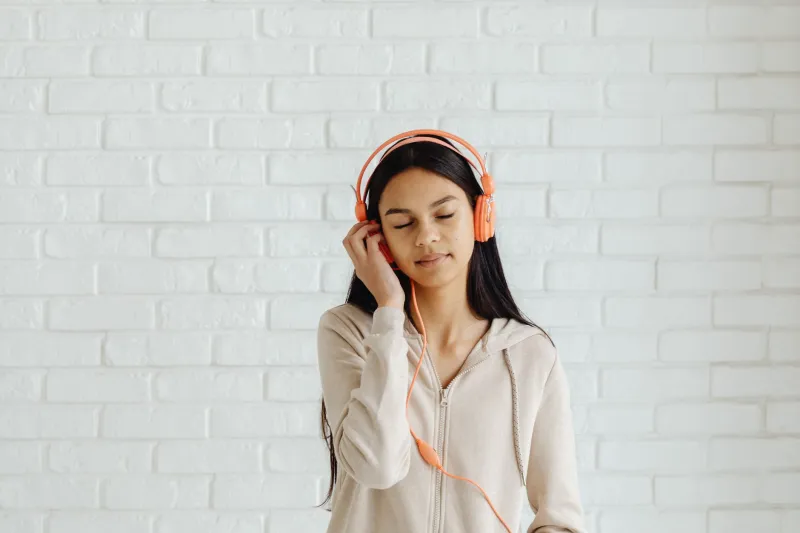
A generation that has developed its musical preferences through earbuds, Bluetooth speakers, and algorithmically curated playlists has a fundamentally different acoustic frame of reference than one that grew up with vinyl, component systems, and album-side listening sessions. This does not mean that younger listeners cannot appreciate high-fidelity audio — the growth of vinyl sales among consumers under thirty suggests considerable appetite for deeper sonic engagement. It does mean that the path to that appreciation may require more deliberate cultivation than it once did.
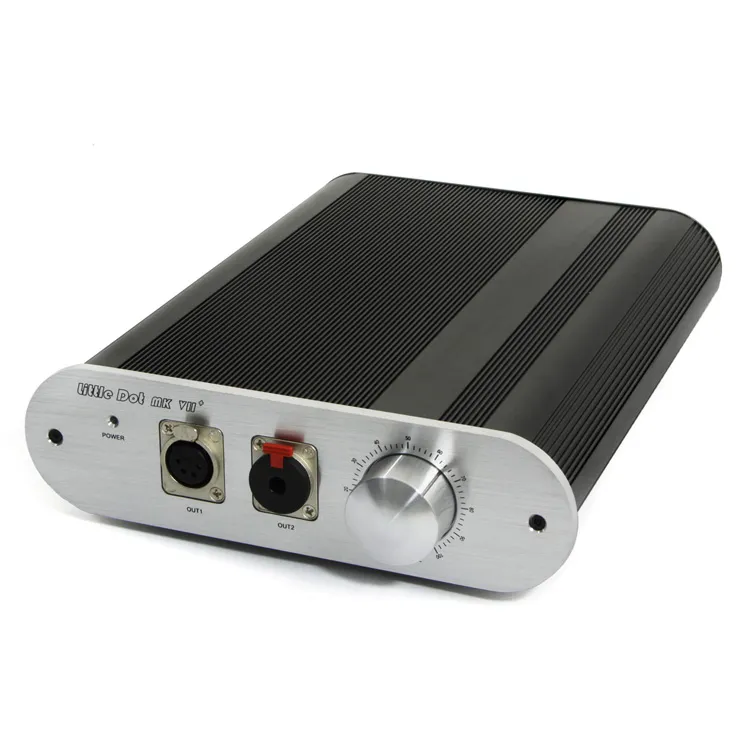
For retailers and manufacturers in the high-fidelity space, this represents both a challenge and an opportunity. The challenge is communicating the value of resolving audio equipment to listeners whose reference experience has been defined by convenience rather than quality. The opportunity is that the contrast, when experienced directly, remains as compelling as it has ever been. The first time a committed listener hears a well-mastered recording through a genuinely capable system — headphones or speakers, it matters less than quality — the reaction is almost invariably the same: a recognition that something was missing, and a reluctance to return to its absence.
That recognition is what high-fidelity audio has always been about. The challenge of the streaming era is ensuring that enough listeners have the opportunity to experience it.