Small Speakers, Large Claims: The Uncomfortable Truth About Compact Loudspeaker Design
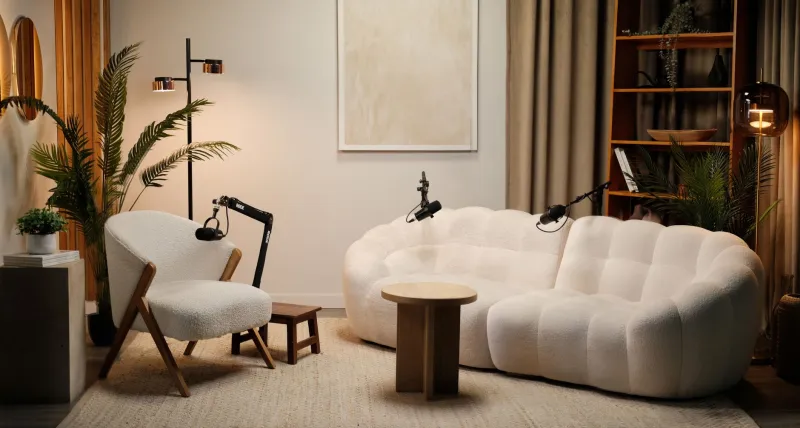
Walk into any high-end audio retailer in the United States today and you will encounter a display floor populated largely by small, tasteful, artfully finished boxes. They are positioned on stands or shelves, often paired with equally compact electronics, and they are marketed with language that suggests they represent the culmination of decades of acoustic research. The photographs in the advertisements place them in minimalist apartments and carefully curated living rooms. The implication is clear: sophistication, in contemporary audio, comes in a small package.
The physics of sound reproduction is not particularly impressed by this narrative.
This is not a polemic against all small speakers, nor a dismissal of the genuine engineering ingenuity that goes into designing compact transducers. It is an argument for honesty — about what size constraints impose on acoustic performance, about the marketing pressures that have made miniaturization synonymous with quality, and about what serious listeners actually sacrifice when they prioritize a speaker's footprint over its acoustic capability.
What Size Actually Governs
Loudspeaker performance is governed by physical laws that do not yield to marketing copy. The most fundamental of these concerns the relationship between driver size, cabinet volume, and low-frequency extension. A woofer cone moves air to produce sound. Its capacity to move air at low frequencies — where wavelengths are long and substantial displacement is required — is directly constrained by its radiating area and the distance it can travel. A four-inch woofer in a two-liter cabinet cannot move the volume of air that a seven-inch woofer in a twelve-liter cabinet can, regardless of how sophisticated the surrounding engineering may be.
The consequences of this constraint are predictable and measurable. Compact speakers roll off at low frequencies, typically beginning their decline somewhere between 80 and 120 Hz. Manufacturers address this in one of two ways: by extending bass through digital equalization (which trades extension for dynamic headroom and introduces its own distortions) or by simply accepting the limitation and recommending subwoofer integration. Neither solution restores what a larger driver in a properly sized cabinet provides naturally: effortless, undistorted bass extension without the phase and integration compromises that accompany external subwoofers.
The Midrange Problem No One Discusses
Bass extension receives most of the criticism directed at compact speakers, but the more insidious limitation is midrange performance — the frequency range, roughly 300 Hz to 3 kHz, where the human voice lives, where the body of stringed instruments resides, and where the emotional core of virtually every musical genre is concentrated.
In a compact two-way speaker, the woofer is asked to cover a very wide bandwidth, from its upper bass extension through the midrange, before handing off to the tweeter at a crossover point that is often set higher than acoustic best practices would suggest. That woofer, optimized for its small cabinet and asked to reproduce both bass and midrange with a single cone, is being asked to do too much. The result is a midrange character that is frequently described by experienced listeners as thin, forward, or slightly mechanical — qualities that no amount of cabinet finishing or driver technology entirely resolves.
Larger two-way designs, and particularly three-way speakers with dedicated midrange drivers, distribute this burden more equitably. A midrange driver optimized for a specific, narrow frequency band — freed from the competing demands of bass extension — can achieve a purity of reproduction in the voice range that compact two-way designs structurally cannot match. This distinction becomes unmistakably apparent on vocal recordings, chamber music, and any material where timbral accuracy in the midrange is paramount.
The Marketing Architecture of Smallness
Understanding why the market has moved so decisively toward compact designs requires acknowledging forces that have little to do with acoustic performance. The rise of streaming has decoupled music from physical media, and with it has come a cultural shift toward treating audio equipment as interior decoration rather than dedicated instrumentation. Consumers increasingly shop for speakers in furniture stores and home goods retailers, where aesthetic compatibility with existing decor is the primary purchasing criterion.
Manufacturers have responded rationally to these market signals. Engineering resources that might once have been directed toward maximizing acoustic performance have been redirected toward industrial design, cabinet materials, and finish quality. The result is a generation of speakers that photograph beautifully, integrate seamlessly into contemporary living spaces, and represent genuine engineering achievements within their constraints — but that have been optimized for marketability rather than musical performance.
The language used to sell these speakers is carefully constructed to obscure this trade-off. "Reference-quality imaging" is invoked to compensate for limited dynamic range. "Extended high-frequency response" draws attention away from bass deficiencies. "Compact form factor" is presented as an engineering achievement rather than a physical constraint. Experienced audiophiles recognize these rhetorical moves. Less experienced buyers, encountering them without a frame of reference, may not.
What Serious Listening Actually Demands
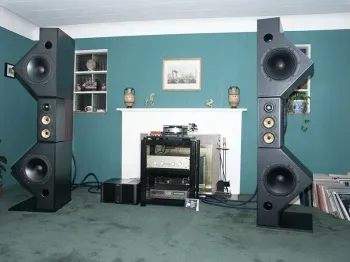
The argument here is not that every listener requires floor-standing speakers of imposing dimension. It is that acoustic performance and physical size are not independent variables, and that the relationship between them has been systematically obscured in contemporary audio marketing.
A listener whose primary musical interest is acoustic jazz in a small apartment may find that a well-designed compact speaker, supplemented by a quality subwoofer, meets their needs admirably. A listener who wishes to reproduce the dynamic range of a symphony orchestra, the chest-resonance of a baritone vocalist, or the physical impact of well-recorded drums will eventually encounter the limits of what small drivers in small cabinets can accomplish — no matter how prestigious the brand or how sophisticated the engineering.
The honest question to ask before any speaker purchase is not whether the speaker looks appropriate in the room, or whether it fits on the shelf, or whether its finish complements the furniture. The question is whether it can actually reproduce the music you care about with the dynamic authority and tonal completeness that music deserves. For many listeners, the answer will require a speaker that is larger, less elegant, and more acoustically capable than the prevailing aesthetic of the current market tends to encourage.
Physics has not changed. Only the marketing has.