The Noise You Never Hear: How Standby Power Is Slowly Poisoning Your Audio System
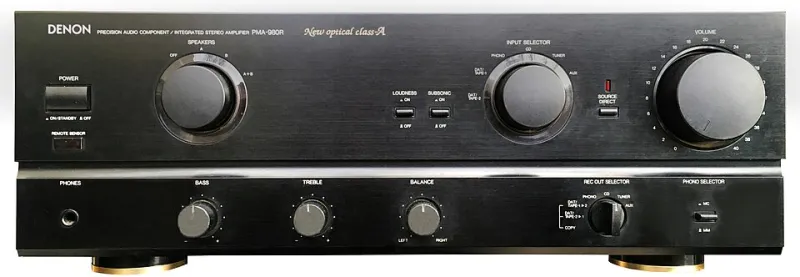
Photo: Pittigrilli, CC BY-SA 4.0, via Wikimedia Commons
There is a particular kind of audiophile frustration that arrives not during a listening session, but in the quiet moments before one begins. You power everything up, settle into your chair, cue a familiar record or a well-loved file, and something is simply not quite right. The soundstage feels compressed. The low end lacks authority. The top end, usually so extended and airy, sounds vaguely smeared. Nothing is measurably broken. Everything measures fine. And yet.
The culprit, in many of these cases, is not your speakers, your cables, or your source material. It is the electrical environment your equipment has been quietly marinating in — for hours, perhaps all day, perhaps indefinitely. Standby power draw, and the high-frequency noise it injects into your home's AC supply, is one of the most underappreciated threats to audio performance in modern listening rooms.
What Standby Power Actually Does
When a piece of audio equipment enters standby mode, it does not simply wait in silence. Switching-mode power supplies — now standard in everything from budget streamers to premium DACs — continue to operate at reduced capacity, generating electromagnetic interference as they convert AC voltage to the DC rails your components actually use. This interference does not stay neatly inside the chassis. It propagates back into the AC line, where it becomes available to every other device sharing that circuit.
The result is what engineers call a contaminated supply rail. Your preamplifier's power supply is now working against a background of high-frequency hash rather than the clean AC sine wave it was designed to filter. Internal regulators do their best, but no regulation scheme is perfect, and the noise floor of your entire system rises accordingly — subtly, invisibly, and in ways that no single component's specification sheet will ever acknowledge.
This is the essential problem with how the audio industry communicates performance. Signal-to-noise ratios are measured under controlled laboratory conditions, with a clean power supply and no external interference. Real listening rooms in American homes are not laboratories. They share circuits with refrigerators, HVAC systems, LED dimmers, and a growing constellation of always-on smart devices. The specification tells you what your DAC can do. The standby ecosystem tells you what it will actually do on a Tuesday evening in your living room.
The Always-On Amplifier Problem
Amplifiers deserve particular scrutiny here. Many audiophiles leave their amplifiers in standby or even fully powered between sessions, reasoning — not without justification — that thermal cycling stresses components and that a warmed-up amplifier sounds more settled than a cold one. Both of those observations have merit. The problem is that a standby amplifier is not a passive object. Its power supply continues to operate. Its bias circuits remain active. And depending on the design, its input stage may be processing whatever noise arrives from upstream sources.
Class A amplifiers, beloved for their sonic purity, are especially relevant here. They run hot by design, and many audiophiles keep them powered continuously to maintain operating temperature. The trade-off is that the amplifier's power supply is in constant negotiation with a noisy AC environment for the duration of its uptime. Over the course of a day, that negotiation leaves traces.
Practical measurement of this phenomenon is difficult, which is precisely why it receives so little attention. The noise in question is broadband and spectrally complex. It does not appear as a discrete frequency spike on a spectrum analyzer. It manifests as a slight elevation of the noise floor, a subtle softening of transient definition, and an almost imperceptible compression of dynamic contrast — exactly the qualities that distinguish a great listening session from a merely acceptable one.
The Network Audio Complication
The proliferation of networked audio components has introduced an additional layer of complexity. Streaming devices, network switches, NAS drives, and wireless access points are now common fixtures in the modern audiophile system. These devices are almost universally designed for continuous operation. They generate switching noise as a matter of course, and when they share a power strip or wall outlet with audio equipment, that noise has a direct pathway into the signal chain.
This is not a theoretical concern. Audio engineers who have measured the AC supply in typical home listening environments consistently find elevated high-frequency noise in the range of 100 kHz to several megahertz — well beyond the audible spectrum, but entirely within the operating range of switching power supplies and their associated filtering networks. When those filters are overwhelmed, the noise finds its way downstream.
Practical Interventions That Actually Work
The encouraging news is that effective power management does not require exotic solutions or significant expenditure. A tiered approach, applied thoughtfully, can produce meaningful improvements in system performance.
Dedicated circuits. If your listening room permits it, a dedicated 20-amp circuit for audio equipment alone is the single most impactful improvement available at the infrastructure level. Removing your amplifier and source components from a shared circuit eliminates the most direct pathway for household noise to enter the audio supply.
Power conditioning. A quality AC power conditioner — not a simple surge protector, but a unit with genuine filtering and regulation capability — addresses what a dedicated circuit cannot. Products from established manufacturers in this category use combinations of passive filtering, balanced power delivery, and sometimes active regulation to present audio equipment with a supply that more closely resembles laboratory conditions. The difference on a well-resolving system is not subtle.
Switched power strips with intentional sequencing. For those who cannot justify a full power conditioner, a switched strip that allows selective powering of components offers meaningful control. Powering down network devices, televisions, and ancillary electronics before a listening session removes their noise contribution from the equation without requiring permanent disconnection.
Linear power supplies for digital sources. Replacing the switching wall-wart power supplies that ship with most streamers, DACs, and network switches with linear alternatives is a targeted intervention with a strong track record among serious listeners. Linear supplies do not generate switching noise by design, and their effect on the noise floor of digital sources is often immediately audible on systems of sufficient resolution.
Deliberate power-down schedules. Simply establishing a habit of powering down non-essential equipment before listening — and allowing amplifiers a proper warm-up period from a cold start rather than relying on continuous standby — addresses the accumulation of noise in a practical, cost-free way.
Listening as Diagnostic
The most reliable instrument for evaluating power quality in your system remains your own ears, applied with patience and discipline. Power your system down completely for several hours, then bring it up fresh and listen critically to a reference track you know intimately. Note the qualities of the soundstage, the definition of transients, the texture of low-frequency information. Then compare that experience to a session conducted after the system has been in standby for an extended period.
Many audiophiles who perform this comparison report a consistent preference for the freshly powered system — not because the components themselves have changed, but because the electrical environment they are operating in has been reset. The noise accumulated during standby dissipates. The power supply has not been in continuous negotiation with a contaminated AC line. The result is a quieter background, a more defined image, and a dynamic presentation that feels less constrained.
That experience, repeated and verified, is more informative than any single measurement. It is also a reminder that high-fidelity audio is a system discipline — and that the system extends all the way back to the wall.