The Showroom Advantage: Understanding Why High-End Audio Rarely Sounds the Same Twice

Audio dealers who specialize in high-end equipment understand something about the listening experience that most of their customers do not: the conditions under which a purchase decision is made are almost never the conditions under which the equipment will actually be used. This is not cynicism. It is simply the reality of how human perception, room acoustics, and behavioral psychology interact — and understanding it is essential for any serious audio enthusiast who intends to spend significant money on new equipment.
The Room That Is Not Your Room
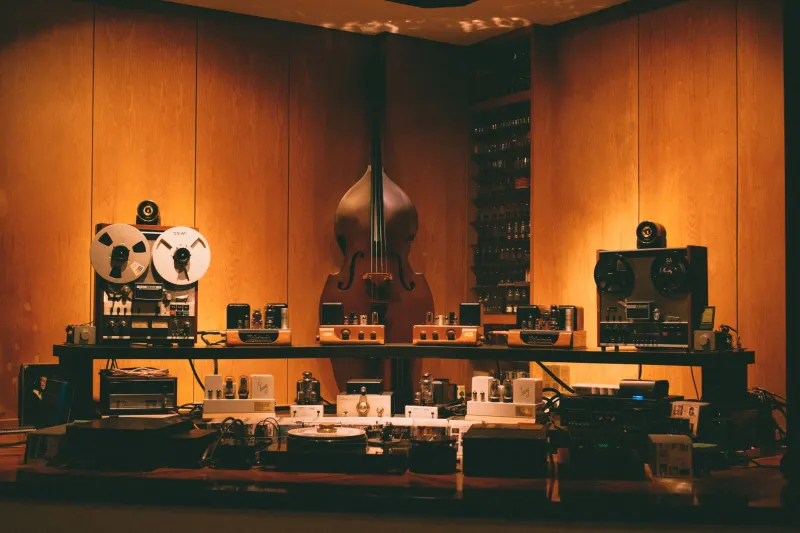
High-end audio showrooms are, almost without exception, acoustically managed spaces. Whether through professional acoustic treatment, carefully chosen room dimensions, or years of incremental adjustment, dedicated listening rooms at reputable dealers tend to present equipment in acoustically favorable conditions. Bass is controlled. Early reflections are managed. The listening position is optimized.
Your living room is none of these things, in all likelihood.
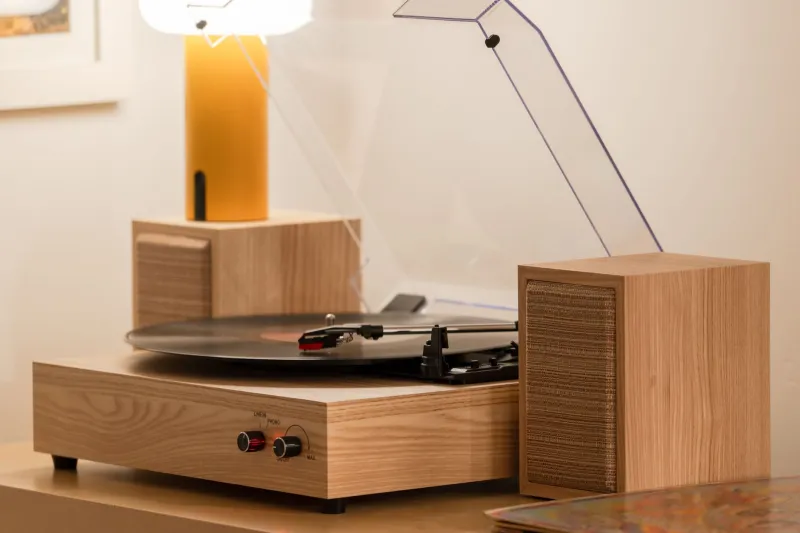
The average American living room — with its parallel walls, hard flooring, glass surfaces, and furniture arranged for sociability rather than acoustics — imposes a set of acoustic conditions that would challenge even the finest loudspeakers. Room modes color the bass. Reflections smear the midrange. The listening position may be against a rear wall or uncomfortably close to a side boundary.
When a speaker sounds extraordinary in a dealer's listening room and merely competent at home, the speaker has not changed. The acoustic environment has changed dramatically, and the speaker is faithfully revealing the difference.
The Psychology of the Audition
Beyond acoustics, the showroom listening experience is shaped by a cluster of psychological conditions that systematically bias perception toward positive evaluation.
The most significant of these is novelty. When a listener encounters new equipment for the first time, the brain engages with heightened attentiveness. Details that would become familiar and recede into the background after weeks of ownership are vivid and striking in a first encounter. The high-frequency extension that seems revelatory during an audition may, after a month of daily listening, register simply as brightness — or, in some cases, as fatigue.
Expectation compounds this effect. A listener who has researched a loudspeaker extensively, read favorable reviews, and traveled to a dealership specifically to hear it arrives with a strong prior toward positive evaluation. Numerous studies in auditory perception confirm that expectation reliably shapes what listeners report hearing. The same sonic event — a piano chord, a vocal phrase — is evaluated more favorably when the listener believes it is produced by more expensive equipment. This is not self-deception in any pejorative sense; it is how human perception operates, and it applies to experienced listeners as well as novices.
Curated Music and the Unfamiliar Benchmark
Dealers who conduct listening demonstrations are, quite reasonably, in the business of showcasing equipment at its best. This means the music chosen for demonstrations is typically selected to highlight a system's strengths: well-recorded acoustic instruments, wide dynamic range, precise imaging. These recordings are often unfamiliar to the customer.
This matters more than it might appear. Familiar music — recordings a listener has heard hundreds of times on multiple systems — provides a stable reference against which deviations are immediately perceptible. Unfamiliar music does not. A listener hearing a piece for the first time has no internal model of what it should sound like. They can evaluate whether it sounds impressive in an absolute sense, but they cannot easily detect colorations, frequency imbalances, or tonal anomalies that would be immediately obvious on a familiar track.
The practical implication is direct: any serious audio audition should include music the listener knows intimately. Bringing a curated selection of familiar, well-recorded tracks to a dealer demonstration is not an affectation; it is the minimum standard for honest evaluation.
Social Dynamics and the Listening Environment
The social context of a dealership introduces additional pressures that are rarely acknowledged. The presence of a knowledgeable and enthusiastic salesperson creates implicit social pressure toward positive evaluation. Expressing dissatisfaction or ambivalence about equipment that a dealer has selected and set up carefully requires a degree of social confidence that many listeners find uncomfortable. The path of least resistance is to find the equipment impressive — and the brain, given any plausible sensory basis for doing so, will generally cooperate.
Listening in a group, which is common at audio shows and occasionally at dealer events, introduces further complications. Research on social influence in aesthetic judgment consistently shows that individuals anchor their evaluations to those expressed by others, particularly those perceived as more expert. A room full of enthusiastic listeners hearing the same system creates conditions in which skepticism becomes psychologically costly.
Practical Frameworks for Honest Evaluation
None of this is an argument against visiting dealers or attending audio demonstrations. These remain the most valuable means of evaluating equipment before purchase. The goal is to approach them with greater awareness of the conditions that shape the experience.
Several practices improve the reliability of an audition. Visiting a dealer more than once, ideally on separate days, helps separate the novelty effect from the equipment's actual character. Requesting a home trial — which many reputable dealers accommodate — allows evaluation in the actual acoustic environment where the equipment will be used. Listening to familiar music, including tracks that the listener finds unforgiving of tonal imbalances, exposes colorations that curated demo material may conceal.
It is also worth evaluating equipment at realistic volume levels. Many systems sound their best at the slightly elevated volumes typical of showroom demonstrations and reveal their limitations — in bass control, dynamic compression, or driver distortion — at the quieter levels more common in actual home listening.
The Honest Purchase Decision
The gap between showroom performance and home performance is not a failure of the equipment or the dealer. It is the predictable consequence of two radically different sets of conditions acting on a perceptual system that is always, in some measure, constructing rather than simply receiving the listening experience.
High-end audio represents a genuine and rewarding pursuit. The finest equipment, properly matched and deployed in a well-considered acoustic environment, delivers musical experiences of remarkable quality. But the path to those experiences runs through honest evaluation — not through the comfortable illusions that showroom conditions, however unintentionally, tend to produce.
The equipment deserves a fair hearing. So do your own ears.