How Fast Sound Dies in Your Room Is Shaping Everything You Hear
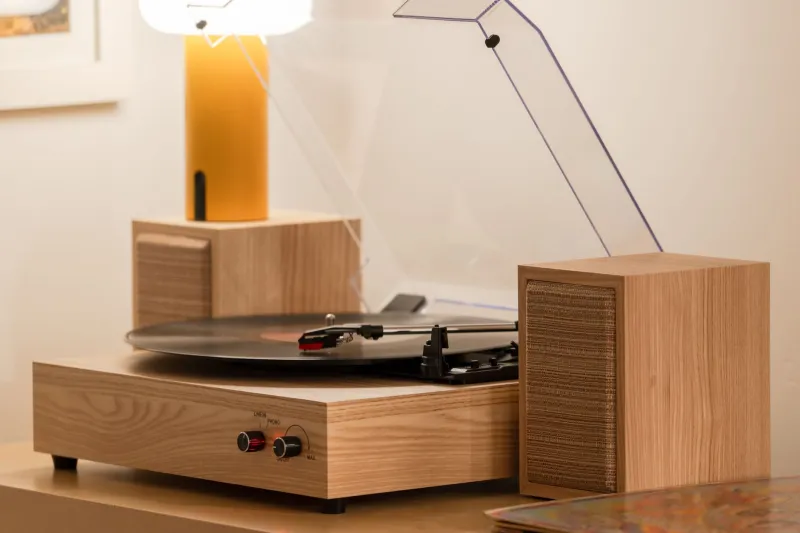
Two audiophiles purchase identical speaker systems. Both set them up with comparable care, at similar distances, in rooms of roughly equivalent size. One reports that the speakers sound musical, spacious, and tonally balanced. The other finds them bright, congested, and fatiguing after thirty minutes. Neither is wrong. Their rooms are simply decaying at different speeds.
Reverberation time — the interval required for sound energy to diminish by 60 decibels after a sound source ceases — is the acoustic parameter that governs this divergence. Expressed as RT60 in measurement shorthand, it is simultaneously one of the most consequential and least discussed variables in high-fidelity listening. Understanding it does not require professional acoustic treatment or a dedicated listening room. It requires only the willingness to recognize that your room is not a neutral container for your speakers. It is an active participant in everything you hear.
The Physics of Decay
When a speaker produces sound, that energy does not simply travel from the driver to your ear and disappear. It reflects from every surface in the room — walls, ceiling, floor, furniture, windows — and each reflection arrives at your listening position fractionally later than the direct sound, carrying a slightly altered spectral character. In a typical American living room or bedroom, these reflections accumulate and overlap, creating a reverberant field that persists well after the original signal has ended.
The RT60 measurement captures how long that field sustains. A room with an RT60 of 0.8 seconds is relatively live: surfaces are reflective, energy persists, and the reverberant field is dense. A room with an RT60 of 0.3 seconds is comparatively dead: absorption is high, reflections decay quickly, and the direct sound from the speakers dominates the listening experience. Neither extreme is inherently correct, but both impose their character on whatever music passes through them.
The complication is that RT60 is not a single number. It varies by frequency. A room that absorbs high frequencies efficiently through soft furnishings while reflecting bass energy from its hard, parallel walls will exhibit a short RT60 at 4 kHz and a long one at 80 Hz. That imbalance has predictable audible consequences: bass accumulates and obscures, while treble sounds thin and dry. The result is often misattributed to the speakers, the amplifier, or the recording — when the room is the actual culprit.
What Decay Rate Does to Your Perception of Speakers
In a highly reverberant room, the brain's ability to resolve fine timing cues — the spatial information encoded in stereo recordings, the leading edges of transient events, the distinction between direct sound and room ambience — is progressively compromised. The reverberant field blurs the image. Instruments lose their positional specificity. The soundstage, rather than extending behind and between the speakers, collapses into a diffuse wash emanating from the speaker locations.
This is why the same speaker that sounds impressively wide and dimensional in a well-treated listening room can sound congested and two-dimensional in a reflective domestic space. The speaker is not failing. The room is not allowing it to succeed.
In an excessively dead room — a space that has been aggressively treated or is naturally absorptive — the opposite problem emerges. The speaker's sense of scale collapses. Music loses the sense of existing in an acoustic environment. Recordings that were made in real spaces, with real room ambience, sound oddly close and intimate in ways that feel unnatural. Extended listening in such environments is surprisingly fatiguing, because the auditory system, denied the spatial cues it expects, works harder to construct a coherent acoustic scene.
The ideal RT60 for a domestic listening room is generally cited in the range of 0.3 to 0.5 seconds, with frequency-dependent variation kept as uniform as possible. These figures are not arbitrary. They reflect the reverberation characteristics of the small concert halls and recording studios where much of the music in a serious audiophile's collection was originally produced.
Identifying Your Room's Acoustic Signature Without Instruments
Professional RT60 measurement requires calibrated equipment and specialized software. But a reasonable qualitative assessment is accessible to any attentive listener. The clap test — a single sharp handclap in the center of the room, followed by careful attention to the character and duration of its decay — reveals a great deal. A clean, brief decay suggests controlled reverberation. A long, ringing tail, particularly one with a tonal quality (which indicates resonant room modes), points to problematic low-frequency accumulation. Flutter echo — a rapid, metallic repetition — identifies parallel reflective surfaces that need addressing.
For a more musically relevant assessment, play a familiar recording of solo piano or acoustic guitar and attend to the decay of individual notes. In a well-controlled room, those decays should resolve cleanly and completely before the next note begins. If they seem to smear together, or if bass notes persist noticeably longer than treble events, the room's RT60 is likely uneven across the frequency spectrum.
Practical Interventions That Do Not Require a Renovation
The most effective low-frequency absorption requires thick, dense material — a reality that limits what most listeners can accomplish without significant structural intervention. However, meaningful improvements to the mid and upper frequency behavior of a room are achievable with common domestic objects.
Large area rugs on hard floors reduce floor-bounce reflections and trim the RT60 at mid frequencies. Bookshelves filled with irregularly sized volumes act as effective diffusers, scattering reflections without eliminating them entirely. Heavy curtains on windows and soft upholstered furniture contribute meaningful absorption. Positioning these elements asymmetrically — rather than in mirrored arrangements that reinforce standing waves — produces more uniform decay across the listening area.
For bass control, the most accessible intervention is positional. Moving speakers away from walls and corners reduces the boundary reinforcement that drives low-frequency accumulation. Even modest adjustments — six inches of additional clearance from a rear wall, for instance — can meaningfully reduce bass RT60 without any acoustic treatment at all.
The deeper lesson is this: before attributing a sonic shortcoming to your speakers, your amplifier, or your source components, spend time understanding what your room is doing to the sound those components produce. The decay rate of your listening space is not a fixed condition. It is a variable you can influence — and doing so may represent the most significant acoustic improvement available to you, at any price point.