Signal Path Secrets: What Speaker Wire Actually Does to Your Sound

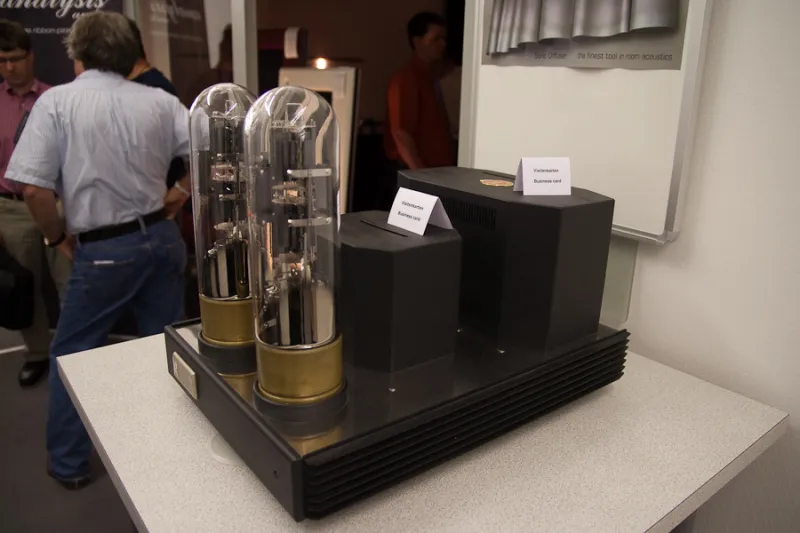
Photo: high-end speaker cables audio equipment close up, via images.pexels.com
Few topics in high-fidelity audio generate as much heat and as little light as the humble speaker cable. On one side of the debate, you have engineers armed with oscilloscopes insisting that any wire with adequate gauge will perform identically to any other. On the other, you have audiophiles who swear their system transformed the moment they replaced their hardware-store zip cord with something purpose-built. Both camps contain people who are partially right — and that partial rightness is precisely where the interesting conversation begins.
At Hawthorne Audio, we spent several weeks running controlled listening sessions and measurement comparisons across a range of cable types, from 16-gauge lamp cord to mid-tier audiophile offerings in the $200–$500 range. What we found challenges the loudest voices on both ends of the argument.
The Physics Are Real, Even When the Marketing Is Not
A speaker cable is not a passive conduit. It is an electrical component with measurable properties: resistance, capacitance, and inductance. Each of these characteristics interacts with your amplifier and your speaker in ways that can, under certain conditions, alter what you hear.
Resistance is the most straightforward. A cable with high resistance bleeds power before it reaches the speaker driver, effectively acting as a voltage divider in the signal path. For a speaker rated at 4 ohms — common among planar magnetic and some high-end dynamic designs — even a modest cable resistance of 0.5 ohms represents a meaningful fraction of the total load. The result is a slight reduction in damping factor, which affects how tightly the amplifier controls woofer movement. In practical terms, you may notice slightly looser, less defined bass.
Capacitance and inductance matter less in most home listening scenarios, but they become relevant at the frequency extremes. High capacitance can cause some amplifiers to oscillate or behave unpredictably, while high inductance can gently roll off the uppermost treble frequencies. Neither effect is dramatic in cables of reasonable length — say, under 15 feet — but they are measurable and, in resolving systems, occasionally audible.
What We Actually Heard in Controlled Listening
Our test system comprised a well-regarded solid-state integrated amplifier, a pair of floor-standing speakers with a nominal 6-ohm impedance, and a high-resolution digital source. We used double-blind switching via a passive relay box to eliminate expectation bias as much as possible. Participants included both trained listeners and enthusiastic amateurs.
Comparing 16-gauge zip cord to a purpose-built 12-gauge oxygen-free copper cable of identical length, listeners detected a statistically consistent difference in bass definition — particularly on double bass recordings and kick drum transients. The difference was subtle but repeatable. It aligned precisely with what the measured resistance values would predict.
Moving from that 12-gauge OFC cable to a premium silver-plated copper cable at roughly four times the price, differences became far less consistent. Some listeners preferred the silver-plated option on high-frequency material, describing cymbals as slightly more "present." Others heard nothing distinguishable. Measurements showed negligible differences in resistance and no meaningful variation in frequency response within the audible band. Our conclusion: the physics no longer supported the price premium.
The Case Against Boutique Cable Mythology
The high-end cable market has, at times, done genuine harm to audio discourse by making extraordinary claims without extraordinary evidence. Directional cables, cryogenic treatment, and proprietary dielectric geometries are frequently marketed with language that borrows the vocabulary of science without its methodology.
When a cable manufacturer claims their product improves "soundstage depth" through a patented conductor arrangement, the burden of proof should be the same as for any other audio component: measurable differences, blind testing, and reproducible results. Most such claims evaporate under those conditions. This does not mean all cable choices are irrelevant — it means the relevant variables are the ones physics can explain.
A Practical Buying Framework by Budget
Rather than recommending specific brands, which change their lineups frequently, we offer a framework grounded in the variables that actually matter.
Under $50 for a standard 8-foot pair: Purchase 12-gauge OFC copper from a reputable wire supplier. Terminate with quality banana plugs or bare wire, stripped cleanly. This configuration will outperform most branded cables at twice the price simply because the gauge is appropriate and the connections are clean. For the vast majority of home audio systems, this is genuinely sufficient.
$50–$200: At this tier, look for well-constructed cables with consistent geometry, quality terminations, and documented conductor specifications. Brands that publish measured specifications rather than relying on subjective superlatives are worth a closer look. You are paying for build quality and convenience, not sonic transformation.
Above $200: You are largely in the territory of diminishing returns unless your system is highly resolving and your speakers present a challenging impedance load. If your amplifier is particularly sensitive to capacitive loads, choosing a low-capacitance design may have genuine benefits. Otherwise, this budget is better directed toward room treatment or source quality improvements.
The Connection Quality Nobody Discusses
In our testing, the single most impactful cable-related variable was not the cable itself — it was the quality of the termination at both ends. Oxidized banana plugs, loosely seated spade connectors, and poorly stripped bare wire introduced measurable resistance variations and, in one case, a faint but audible buzzing artifact at higher volumes.
If you are skeptical that your cables are performing as well as they should, begin by inspecting and cleaning the connection points. A small amount of contact enhancer applied to metal terminations, combined with a firm mechanical connection, will do more for your signal integrity than any cable upgrade in the sub-$500 range.
The Honest Summary
Speaker cables matter — but they matter in specific, physics-governed ways that have clear upper limits. The wire connecting your amplifier to your speakers is a component worthy of thoughtful selection, not an afterthought and not a mystical variable. Gauge it appropriately for your speaker's impedance and your cable run length. Terminate it well. Keep connections clean. Beyond those fundamentals, your listening budget is almost always better spent elsewhere in the signal chain.
The best cable is one that gets out of the way of the music. That is not a romantic notion — it is an engineering objective, and it is entirely achievable without spending a fortune.