Does Lossless Audio Actually Sound Better? We Listened Hard So You Don't Have To

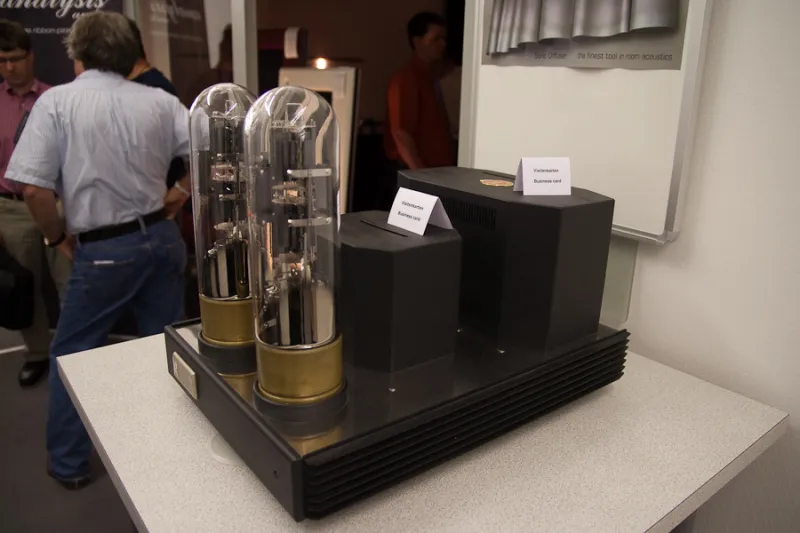
Photo: Kevin B 3, CC BY 2.0, via Wikimedia Commons
The promise embedded in every high-resolution audio advertisement is straightforward: more data means better sound. It is a compelling proposition, particularly for listeners who have invested meaningfully in quality headphones or a dedicated home listening setup. Streaming services have been eager to capitalize on this intuition, positioning lossless and hi-res tiers as the natural next step for the discerning music lover.
But the relationship between bit depth, sample rate, and perceived audio quality is considerably more complicated than the marketing language implies. The question worth asking — the one that rarely appears in promotional copy — is not whether lossless audio is technically superior. It is whether that technical superiority translates into an audible difference under realistic listening conditions, and for which listeners that difference is meaningful enough to justify additional cost or complexity.
Understanding the Formats: A Necessary Foundation
To evaluate these claims honestly, it helps to understand what the competing formats actually contain.
Standard streaming audio — the kind delivered by Spotify's default tier, for example — typically uses a lossy compression codec such as AAC or Ogg Vorbis, encoded at bitrates ranging from roughly 128 to 320 kilobits per second. These codecs work by discarding audio information that psychoacoustic models predict the human ear is unlikely to perceive, particularly in the presence of louder, simultaneous sounds. The result is a file dramatically smaller than the original recording while retaining, in theory, the perceptually significant content.
Lossless formats — FLAC, ALAC, and their streaming equivalents — retain every bit of the original digital audio without compression-induced data loss. Apple Music Lossless delivers CD-quality audio at 16-bit, 44.1 kHz, which represents the full resolution of a standard compact disc. Apple's Dolby Atmos and Hi-Res Lossless tiers extend to 24-bit depth and sample rates up to 192 kHz. Tidal HiFi Plus similarly offers both CD-quality FLAC and MQA-encoded files claiming resolutions beyond CD standard, though MQA has attracted considerable technical criticism regarding its actual fidelity to the source material.
The theoretical case for higher bit depth and sample rate is legitimate within certain parameters. Greater bit depth expands dynamic range — the span between the quietest and loudest reproducible signal. Higher sample rates extend the frequency ceiling of the recording, though this ceiling already exceeds the upper limit of human hearing at CD-standard 44.1 kHz, which captures frequencies up to 22.05 kHz.
Where the Audible Differences Live
Controlled listening tests — particularly blind and double-blind studies conducted by researchers and audio publications — have produced results that should temper expectations. Multiple well-designed studies, including work published by the Audio Engineering Society, have found that trained listeners struggle to reliably distinguish CD-quality lossless audio from high-quality lossy encoding (320 kbps AAC or equivalent) under blind conditions. When differences are perceived, they are frequently subtle and inconsistent across listeners and recordings.
This does not mean the formats are identical. It means the audible gap between a well-encoded 320 kbps stream and a 16-bit lossless file is narrower than the marketing suggests, and for many listeners in typical environments, it falls below the threshold of reliable perception.
The differences that do emerge under careful listening tend to cluster around specific sonic characteristics. Spatial imaging — the sense of width and depth in a stereo presentation — can appear slightly more defined with lossless sources on well-resolving playback chains. Transient detail, particularly in percussion and plucked string instruments, may exhibit marginally greater precision. And in quiet passages where psychoacoustic masking is absent, the noise floor of a lossless file can be measurably lower, though whether this translates into an audible difference depends heavily on the dynamic range of the recording and the sensitivity of your headphones or speakers.
The honest summary is that lossless formats offer their most perceptible advantages at the margins — in recordings with wide dynamic range, on resolving playback equipment, in quiet listening environments, and among listeners who have developed the attentional focus to notice fine-grained sonic distinctions.
The Playback Chain Problem
Perhaps the most underappreciated factor in this discussion is the role of the playback chain — everything between the streaming service and your ears.
A 24-bit, 96 kHz file delivered to a smartphone's built-in digital-to-analog converter and then to a pair of mid-tier wireless earbuds is not delivering anything close to its theoretical potential. The DAC in most consumer smartphones, while functional, introduces its own noise and distortion characteristics. Bluetooth audio transmission, even using codecs like aptX HD or LDAC, applies additional lossy compression to the signal before it reaches the earpiece. The result is that the lossless source file is being degraded by multiple downstream processes, and the format advantage — whatever it may be — is substantially diminished before the audio reaches your auditory system.
Conversely, the same lossless file played through a dedicated portable DAC/amplifier — a category that has expanded significantly in the American market over the past several years — connected via a wired connection to a quality pair of over-ear headphones presents a genuinely different proposition. Here, the playback chain is capable of resolving the differences that higher-quality source files can offer. Listeners who have assembled this kind of system report more consistent and meaningful format-dependent differences than those relying on integrated smartphone audio.
The practical implication is that upgrading your streaming tier before upgrading your playback hardware is likely to produce minimal returns. If your current chain cannot resolve the nuances that lossless audio preserves, the premium subscription fee is purchasing a theoretical advantage that your equipment cannot actualize.
Evaluating the Services Honestly
For listeners who have the playback infrastructure to benefit from higher-quality sources, the streaming landscape offers several credible options.
Apple Music Lossless represents the most accessible entry point for most American listeners, included at no additional cost within the standard Apple Music subscription. For iPhone users with a quality DAC and wired headphones, this is a genuinely compelling value. The library breadth is substantial, and the lossless delivery is technically sound.
Tidal HiFi Plus carries a higher subscription cost and has faced legitimate technical scrutiny regarding its MQA implementation. MQA's claims of delivering studio master quality have been contested by audio engineers who argue the format introduces its own processing artifacts. For listeners who prioritize transparent, unprocessed lossless delivery, FLAC-based alternatives may be preferable.
Amazon Music HD, available at a modest premium over the standard tier, delivers genuine lossless and hi-res content with a library competitive with the major services. It receives less attention in audiophile circles but represents a technically solid option for Prime subscribers.
A Practical Framework for Your Decision
The decision to invest in a higher-quality streaming tier should be conditioned on an honest assessment of your listening profile. If you consume music primarily through wireless earbuds during commutes or exercise, the format difference is unlikely to be perceptible, and the standard streaming tier is a rational choice. If you have a dedicated listening setup — quality over-ear headphones, a capable DAC, a quiet room — and you engage with music as a focused activity rather than background accompaniment, lossless audio is worth experiencing for yourself.
The most important step is not subscribing to a premium tier. It is listening critically, under controlled conditions, to the same recording in different formats on your specific equipment. Many services offer trial periods. Use them deliberately. Trust your ears over specification sheets and promotional claims.
At Hawthorne Audio, we hold that the goal of any audio investment is a more satisfying connection to the music itself. Whether lossless streaming achieves that for you depends entirely on the honesty with which you evaluate your own listening context — not on the resolution numbers printed in an advertisement.