The $200 DAC vs. the $1,000 DAC: What a Blind Listening Test Actually Revealed
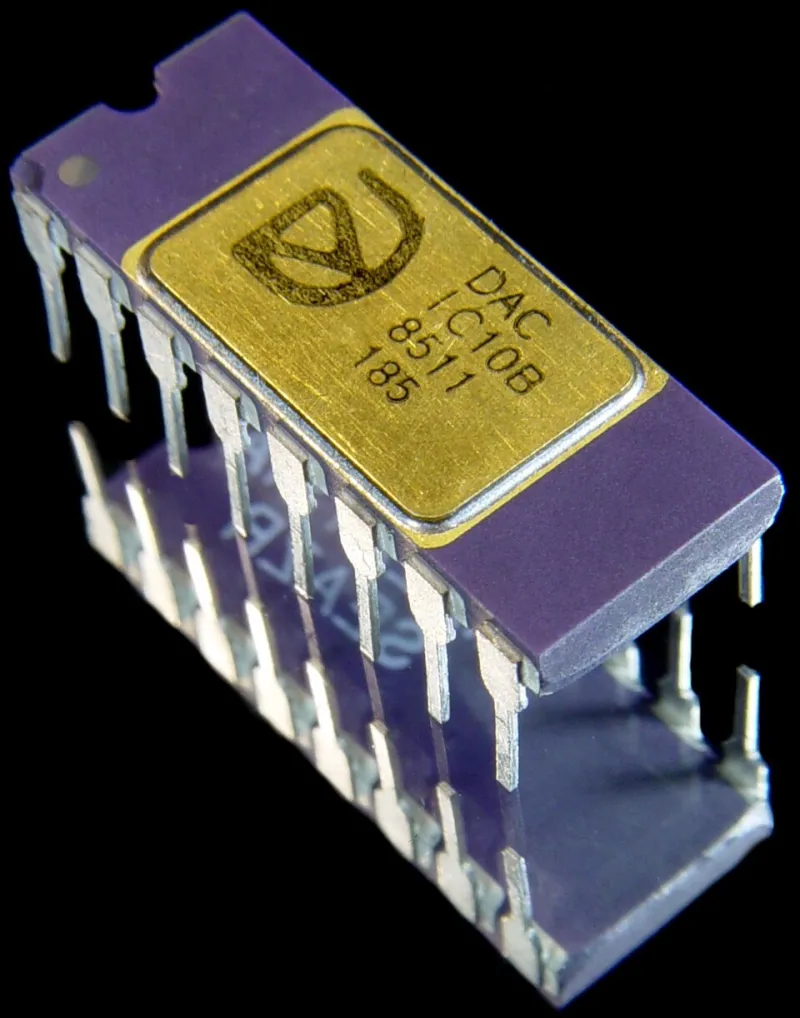
Photo: Mister rf, CC BY-SA 4.0, via Wikimedia Commons
Few topics generate more heat in audiophile circles than digital-to-analog converters. The DAC is the component that translates the binary data of a digital audio file into the analog voltage that drives your amplifier and, ultimately, your speakers or headphones. It sits at a critical juncture in the signal chain, and the industry has built an entire mythology around the premise that more expensive DACs sound dramatically, unmistakably better. We decided to put that premise to a structured test.
Over several listening sessions at our facility, we evaluated four DACs spanning a significant price range: a capable budget unit at approximately $200, a well-regarded mid-range model at around $400, a popular upper-mid-tier converter near $700, and a premium standalone DAC retailing at roughly $1,000. All four were evaluated blind—meaning the listener did not know which unit was playing at any given moment—using a level-matched switching protocol to eliminate volume-bias, one of the most persistent confounders in comparative audio listening.
The test chain was consistent throughout: files played from a dedicated computer running bit-perfect audio software, each DAC connected via USB, output routed through a reference-quality headphone amplifier to a pair of open-back planar magnetic headphones. Source material included uncompressed 16-bit/44.1 kHz FLAC files, 24-bit/96 kHz high-resolution recordings, and a DSD64 track for the units that supported it.
What the Specifications Actually Mean
Before reporting what we heard, it is worth examining what DAC specifications represent—and where they become audiophile theater.
Total harmonic distortion plus noise (THD+N) is the most commonly cited performance metric. A well-designed modern DAC chip—the ESS Sabre series, AKM Velvet Sound family, or Burr-Brown PCM line—is capable of achieving THD+N figures below -110 dB. At those levels, the distortion is so far below the threshold of audibility that further improvements on paper carry no perceptible benefit. All four DACs in our test measured below -100 dB THD+N. The budget unit measured slightly worse than the premium unit, but both figures were below what any human ear can detect under controlled conditions.
Dynamic range and signal-to-noise ratio follow similar logic. Once a DAC achieves 110+ dB dynamic range, it has exceeded the practical capability of nearly every listening environment and recording. Claiming audible superiority based on a 3 dB SNR advantage at that level is marketing, not acoustics.
Where specifications become genuinely meaningful is in jitter performance, output impedance, and the quality of the analog output stage. Jitter—timing irregularities in the digital clock—can introduce sidebands and a subtle smearing of transient detail. Output impedance affects compatibility with downstream amplifiers. And the analog stage, which buffers and conditions the signal after conversion, varies considerably in design quality even among DACs using identical converter chips.
What We Heard
The results were instructive, though not always in the direction expected.
In direct A/B comparisons between the $200 unit and the $400 unit, listeners correctly identified the $400 unit more often than chance would predict, but not with the confidence one might expect from a price doubling. The $400 unit presented a slightly more composed soundstage on densely orchestrated material, and its treble extension felt marginally more natural on acoustic guitar recordings. These were not dramatic differences. They were the kind of differences that become apparent only under controlled, attentive listening—not the kind that announce themselves on casual playback.
The comparison between the $400 and $700 units was, frankly, the most ambiguous of the session. Listeners were split nearly evenly on preference, and several changed their minds between sessions. On two of the five test tracks, the $400 unit was actually preferred by a majority of listeners—an outcome that surprised us and should give pause to anyone planning to spend an additional $300 on a marginal performance gain.
The $1,000 unit did demonstrate a consistent, if modest, advantage over the $200 unit on high-resolution source material. Its imaging precision on a well-recorded jazz trio was more defined, and low-frequency articulation on a double bass passage was slightly more distinct. Whether that improvement justifies a $800 price premium is a question only an individual listener's priorities—and budget—can answer. In absolute terms, the gap was smaller than the price ratio implies.
Where the Money Actually Goes
This is the question that deserves an honest answer: if the conversion chips and fundamental performance metrics are similar, what accounts for the price difference?
Several factors contribute legitimately to cost. Premium power supply design—linear regulators, well-filtered rails, sometimes external power supplies—reduces noise injected into the analog stage and can meaningfully improve measured performance. Higher-quality output stage components (op-amps, discrete transistors, coupling capacitors) affect the character of the analog signal. Industrial design, chassis rigidity, and build quality are real costs that contribute nothing to sonic performance but matter to long-term reliability and the ownership experience.
Then there are factors that contribute primarily to perception: premium packaging, brand prestige, and the psychological weight of spending more. These are not cynical observations—they are documented phenomena in consumer psychology. An honest assessment of DAC pricing must acknowledge that a portion of the premium tier's cost is theater.
The Practical Verdict
For listeners using headphones or a desktop system, a well-chosen DAC in the $200–$400 range—particularly from established manufacturers with strong engineering pedigrees—will deliver conversion quality that is genuinely excellent by any objective standard. If your current setup lacks a dedicated external DAC entirely, adding one in this tier will likely produce the most audible improvement per dollar available to you.
For listeners who have addressed every other variable in their chain—source quality, amplification, transducers, room acoustics—and are seeking the final increment of refinement, a premium DAC may offer a tangible, if subtle, improvement. The key word is final. Spending $1,000 on a DAC before investing in quality headphones or proper room treatment is a misallocation of resources.
The hierarchy remains: source material quality, transducers, amplification, then conversion. A great recording through a $200 DAC will sound better than a poor recording through a $1,000 one. That is not a compromise—it is the nature of the signal chain.